


Magnesium Alloy

One-stop Magnesium Alloy Factory in China
SICHUAN Liaofu Special Steel Company...,Ltd is a professional Magnesium Alloys manufacturer and supplier in China. We offer a wide range of steel to meet the steel procurement needs of different enterprises and realize one-stop steel supply.
Why choose us
SICHUAN Liaofu Special Steel Company...,Ltd
Our Certificate
n order to realize competitive products to fulfil our customers' demands and quality considerations, our integrated quality and work management system is continuously being improved and developed further. We has passed ISO9001- 2000 quality system certification, obtaining AAA credit.
23 years of experience in special steel manufacturing
Our Service
Knowing that delivering goods to customers' hands on time is as important as providing quality goods, we treat every business transaction as a priority. Be it a raw material or a finished material with machining or heat treatment, every effort will be made to get your purchase order to you in the shortest lead time
A large number of spot stock steel supply


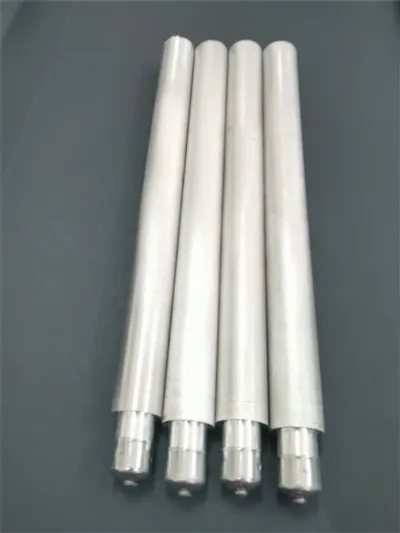

Definition of magnesium alloy
Magnesium alloy is an alloy composed of magnesium and other elements. It is characterized by: low density (1.8g/cm3 magnesium alloy), high specific strength, large specific elastic modulus, good heat dissipation, good shock resistance, greater impact load capacity than aluminum alloy, good corrosion resistance to organic matter and alkali.
The main alloying elements are aluminum, zinc, manganese, cerium, thorium and a small amount of zirconium or cadmium. At present, magnesium aluminum alloy is the most widely used, followed by magnesium manganese alloy and magnesium zinc zirconium alloy. Mainly used in aviation, aerospace, transportation, chemical, rocket and other industrial sectors. It is the lightest metal in practical metals, and the specific gravity of magnesium is about 2/3 of aluminum and 1/4 of iron. It is the lightest metal among practical metals, with high strength and high rigidity.
Magnesium alloy product characteristics
Low density, good specific performance, good shock absorption performance, good electrical and thermal conductivity, good process performance, poor corrosion resistance, easy oxidation and burning, poor heat resistance.
Its processing and corrosion and mechanical properties have many characteristics: fast heat dissipation, light weight, good rigidity, with a certain corrosion resistance and dimensional stability, impact resistance, wear resistance, good attenuation performance and easy to recycle; In addition, there are high thermal and electrical conductivity, non-magnetic, good shielding and non-toxic characteristics.
Application: Magnesium alloy is widely used in portable equipment and automotive industry to achieve the purpose of lightweight.
The difference between magnesium alloy and aluminum alloy
The differences between magnesium alloy and aluminum alloy include: different tensile strength, different fatigue resistance, different metal oxidation, different manufacturing costs, different specific gravity density, and different elastic modulus.
Different tensile strength
The strength of the product made of the same volume of magnesium alloy material is lower than that of aluminum alloy. To achieve frame strength, magnesium alloy materials require increased material thickness and pipe length, so there is no advantage over aluminum alloy in terms of weight.
The fatigue strength is different
The durability of the frame made of the same volume of magnesium alloy is worse than that of the aluminum alloy frame, which is a fatal shortcoming of magnesium alloy. With the increase of the number of rides, the strength of the magnesium alloy frame will be significantly reduced, and even the frame life will not exceed 2-3 years. As a result, magnesium alloy frames are rarely used by professional riders.
Metals have different oxidation properties
The periodic table of elements shows that magnesium alloys are more easily corroded by oxidation than aluminum alloys.
Different manufacturing costs
Magnesium alloys are active metals, which have higher requirements for manufacturing equipment and environment, resulting in high manufacturing costs. The produced magnesium alloy products are much less cost-effective than aluminum alloy 234.
Different specific gravity density
Under the same volume condition, magnesium alloy is lighter than aluminum alloy. This is a significant advantage of magnesium alloy 234.
The elastic modulus is different
The rigidity of magnesium alloy material is less than that of aluminum alloy. The frame made of magnesium alloy material is less rigid than that of aluminum alloy frame, and the frame made of the same thickness and pipe diameter will absorb more trampling force during actual riding and affect the riding efficiency.11
The two alloys each have advantages and disadvantages, and the application field is also different. When choosing to use, it is necessary to make decisions according to specific application requirements and conditions.
Various grades of magnesium alloy standard composition content table
| Steel grade | Al: | Si: | Cu: | other: | Zn: | Be: | Mg: | Fe: | Mn: | Ni: | Ca: |
| AZ91D | 8.5-9.5% | 0.05%max | 0.025%max | 0.01%max | 0. 45-0.9% | 0.004%max | margin | 5-30PPM | 0.17 to 0.4% | 0.001% Max | -- |
| AM50A | 4.5-5.3% | 0.05%max | 0,008%max | 0.01%max | 0.2%max | 0.004%max | margin | 5- 30PPM | 0.28-0.5% |
0.001%max | -- |
| AM6OB | 5.6-6.4%max | 0.05%max | 0,008%max | 0.01%max | 0.2%max | 0.004%max | margin | 5- 30PPM | 0.26-0.5% | 0,001%max | -- |
| YGB08 | 7.5-9.2% | 0.1%max | 0, 05%max | 0.005%max | 0.2-0.8% | 0.05%max | margin | 5- 30PPM | 0.15-0.5% | 0.005%max | -- |
| AZ80 | 8-9.2% | 0.1% mar | 0.05% Max | 0.03% Max | 0.2-0.8% 0. |
0.05%max | margin | --- | 0.12-0.5% | 0.005%max | -- |
| AZ21 | 2-3% | 0.05%max | 0.05%max | 0.3%max | 0.5-1% | 0.003%mar | margin | --- | 0.4%max | 0.001%max | 0.04%max |
| AS31 | 3.3-4.0% | 0.7-1.15% | <0.008% | <50ppm | 0.05-0.2% | <0.0035% | 5-15ppm | <0.20% | 0.25-0.5% | <0. 001% | Other single impurities: < 0.01% |
| AZ63 | 5.3-6.7% | 0.05% max | 0.01% max | Hmax | 2.5-3.5% | 0.003% max . | margin | 10-20ppm | 0.15-0.5% |
0.005%max | |
| AZ40 | 3.5-4.0% | 0.1%max | 0.05%max | 0.01%max | 0.2-0.8% | 0.05%max | margin | --- | 0.2-1.0% | 0.001%max | |
| A231 | 2.5-3.5% | 0.05%max | 0.01%max | 0.3%max | 0.7-1.3% | 0.003%max | margin | --- | 0.2-1.0% | 0.001%max 0.04%max |
|
| A261 | 5.9-6.6% | 0.1%max | 0.05%max | 0.03%max | 0.7-1.5% | -- | -- | 0.05%max | 0.15-0.4% |
Magnesium alloy characteristics
Magnesium alloy is the lightest metal structural material. The specific gravity is only 1.8, which is 2/3 of aluminum and 1/4 of iron, and its specific strength is as high as 133, which can be comparable to the specific strength of titanium, which makes magnesium alloy can be used as a high-strength material. At the same time, magnesium alloy because of its excellent casting, extrusion, cutting and bending processing properties, can be widely used in automotive, electronics, textile, construction and military.
Light weight
Resistance to deformation
Shock absorption and noise reduction
Dimensional stability
tractability
High stiffness ratio
characteristics
●Light weight, iron metal is currently the lightest metal structural material in practical applications in the world.
●High specific strength. The ratio of strength to mass of magnesium alloy is high and it has certain bearing capacity.
●Small elastic modulus, good rigidity, strong seismic force, long-term use is not easy to deform.
●Good anti-electromagnetic interference and shielding.
●No pollution to the environment.
Types of magnesium alloy:
The alloy name of magnesium alloy is based on the main added alloy element and its percentage.
Characteristics of magnesium alloys
It is the lightest metal among practical metals
The specific gravity of magnesium is about two thirds that of aluminum and one quarter that of iron. It is the lightest of practical metals.
Application: Magnesium alloy is widely used in portable equipment and automotive industry to achieve the purpose of lightweight.
Comparison of physical properties of various materials
| Material name |
Density (g/ cm³) |
Fusing point ("C) |
Thermal conductivity (W/Mk) |
Tensile strength (MPa) |
Yield point (MPa) |
Rate of elongation (%) |
Specific strength |
Young's modulus (GPa) |
|
| magnesium alloys | AZ91 | 1.82 | 596 | 72 | 280 | 160 | 8 | 154 | 45 |
| AN60 | 1. 79 | 615 | 62 | 270 | 140 | 15 | 151 | 45 | |
| Aluminium alloy | 380 | 2.70 | 595 | 100 | 315 | 160 | 3 | 117 | 71 |
| steel | Carbon steel | 7.86 | 1520 | 42 | 517 | 400 | 22 | 66 | 200 |
| plastic | ABS | 1.03 | 90(Tg) | 0.2 | 35 | * | 40 | 34 | 2.1 |
| PC | 1.23 | 160(Tg) | 0.2 | 104 | * | 3 | 85 | 6.71 | |
High strength, high rigidity
Although the specific gravity of magnesium alloy is heavier than that of plastic, the strength and elasticity per unit weight are higher than that of plastic, so in the case of the same strength parts, the parts of magnesium alloy can be thinner and lighter than those of plastic. In addition, because the specific strength of magnesium alloy is also higher than that of aluminum alloy and iron, the weight of aluminum or iron parts can be reduced without reducing the strength of the parts.
Applications: Automobile engine attachment bracket, clutch housing, transmission light body, instrument panel frame, steering wheel frame, seat frame, body cell phone, laptop LCD screen size increases year by year, in their branch brace frame and back housing using magnesium alloy.
| Physical property | |||||
| Materials. | Density g/ cm3 |
Tensile strength N/mm2 |
Heat transfer performance W/ m.K |
Specific strength | Corrosion resistance |
| Magnesium alloy MS1-F | 1.8 | 260 | 155 | 133 | ◎: Stable |
| Aluminium alloy | 2.7 | 155 | 247 | 57 | ◎: Stable |
| A6053S-T5 Carbon fiber |
2.0 | 200 | 0.3 | 100 | ◎: Stable |
Effective Heat Transfer
While the thermal conductivity of magnesium alloys is inferior to that of aluminum alloys, it surpasses that of plastics by several orders of magnitude. Consequently, magnesium alloys are employed in electrical products where they can efficiently dissipate internal heat to the exterior.
Application: Hood Cover
Magnesium alloy is utilized in housings and cooling components for devices such as computers and projectors that generate significant internal heat. The use of magnesium alloy allows for TV casings to be designed without the need for heat dissipation holes.
Superior Electromagnetic Shielding
The electromagnetic shielding capabilities of magnesium alloys exceed those provided by electroplated shielding films on plastics, thereby eliminating the necessity for electroplating processes when utilizing magnesium alloys.
Application: Magnesium alloy is incorporated into mobile phone housings and shielding materials.
Excellent Machinability
Magnesium alloys exhibit lower cutting resistance compared to other metals, enabling faster processing speeds during machining.
| Processability | |||||
| Materials | Extrusion | Cutting | Bend | Weld | Surface treatment |
| Magnesium alloy | excellent: Suitable for complex section shape shape |
excellent | Normal:Hot bending | Normal: Heat affected zone small |
excellent:Anodizing and coating |
| Aluminium alloy | excellent: Suitable for complex section shape shape |
Relatively bad | Normal:Cold bending | Relatively bad Heat affected zone big |
excellent: Anodizing and coating |
| Steel | Normal: Applicable to simple cross sections only shape |
Normal | Normal:Cold bending | excellent: Excellent | Relatively bad: Painting |
Good pitting resistance
Compared with other metals, the deformation resistance of magnesium alloy is greater, and the depression caused by impact surface is smaller than that of other metals.
High absorption of vibration shocks
Because of its good absorption of vibration energy, magnesium alloy can reduce vibration when used in drive and transmission components. In addition, the impact energy absorption performance is good, and the magnesium alloy has better elongation than the aluminum alloy.
Upon impact, it can absorb the impact energy without fracture.
Application: In order to improve the impact absorption and lightweight of the car after impact, ferroalloy is used in the steering wheel and seat.
Good creep resistance
Magnesium tends to creep less in size with time and temperature.
Regeneration
Unlike plastics, magnesium alloys can be simply recycled without reducing their mechanical properties, while plastics are difficult to recycle without reducing their mechanical properties. Magnesium alloys have a low melting point compared to other metals,
Low specific heat
In regeneration: The energy consumed during melting is 4% of the energy consumed in the manufacture of the new material.
Mechanical properties of the product
| Materials | Forging technology | Sleeve temperature (K) | Injection speed (m/s) | Yield strength (Mpa) | Tensile strength (Mpa) | Elongation (%) |
| AZ91D | thixoforming | 878 | 1.4 | 180 | 299 | 10 |
| Die casting * | 160 | 240 | 3 | |||
| AM60B | thixoforming | 893 | 1.4 | 148 | 278 | 19 |
| Die casting | 963 | 2.9 | 115 | 239 | 12 | |
| Die casting * | 130 | 225 | 8 | |||
| AM50A | Thixoforming. | 898 | 1.4 | 140 | 269 | 20 |
| Die casting | 963 | 2.9 | 112 | 232 | 13 | |
| Die casting * | 125 | 210 | 10 | |||
| AS41B | Thixoforming. | 903 | 1.7 | 157 | 249 | 9 |
| Die casting * | 140 | 215 | 6 |
Sichuan Liaofu Special Steel Company is one of the leading magnesium alloy manufacturers and suppliers in China for 20 years. We warmly welcome you to wholesale magnesium alloy made in China here from our factory. All products are with high quality and competitive price.